Learn › Why great games never die › Will digital games last?
Will today's digital games still be played in 100 years?
Here is a sentence that was never true before this century: a game you love can be switched off, remotely, by someone you've never met. Chess cannot be shut down. Go has no server to close. But thousands of digital games have already gone dark — purchased, loved, and then simply ended. So the question this shelf has been circling gets its hardest test: of the games on your phone right now, which will greet 2126 — and what decides?
The uncomfortable question
Every previous game in history had one comforting property: it could not be taken from its players. Boards burn and pieces scatter, but the game lives in heads, and heads could always rebuild it — with pebbles, with scratched lines, with whatever the shipwreck left. Digital games broke that guarantee. For the first time, a game can depend on infrastructure its players don't control: a server, a company, a license, an app store's continued goodwill. The players can be ready, willing, and mid-rivalry — and the game ends anyway, on a date chosen in a meeting.
This isn't hypothetical doom-talk; it's routine. Online game shutdowns happen every year by the dozen — beloved titles with millions of former players, gone from every device at once. The pattern is now familiar enough to have a name in preservation circles: games as a service become games as a memory. And it forces a genuinely new question onto the oldest shelf in entertainment: what, exactly, dies when a digital game dies — and is there a part that can't?
What actually dies: the failure chain
Autopsy the shutdowns and the same chain appears, link by link. The server dies first — matchmaking, accounts, the authoritative game state; for online-only designs, that's instant death, whatever still sits installed on your device. The client dies slower: the local app lingers until an operating-system update, a store delisting, or a new device with no way to reinstall it. The license kills quietly: games built on rented content can become legally unrevivable even when the code survives — nobody may lawfully bring them back. And the community dies last and worst: the ladders, the rivalries, the accumulated culture — the beginnings of ingredient five — scatter, and with them the thing that made the game a place rather than a program.
Notice what's genuinely new here versus the ancient extinctions. Old games died of lost attention or lost transmission — slow, human causes. Digital games can die of infrastructure, instantly, at full popularity, mid-love. Senet faded over centuries as its world changed; a server game can be adored on Tuesday and unplayable on Wednesday. The kill switch is the historical novelty.
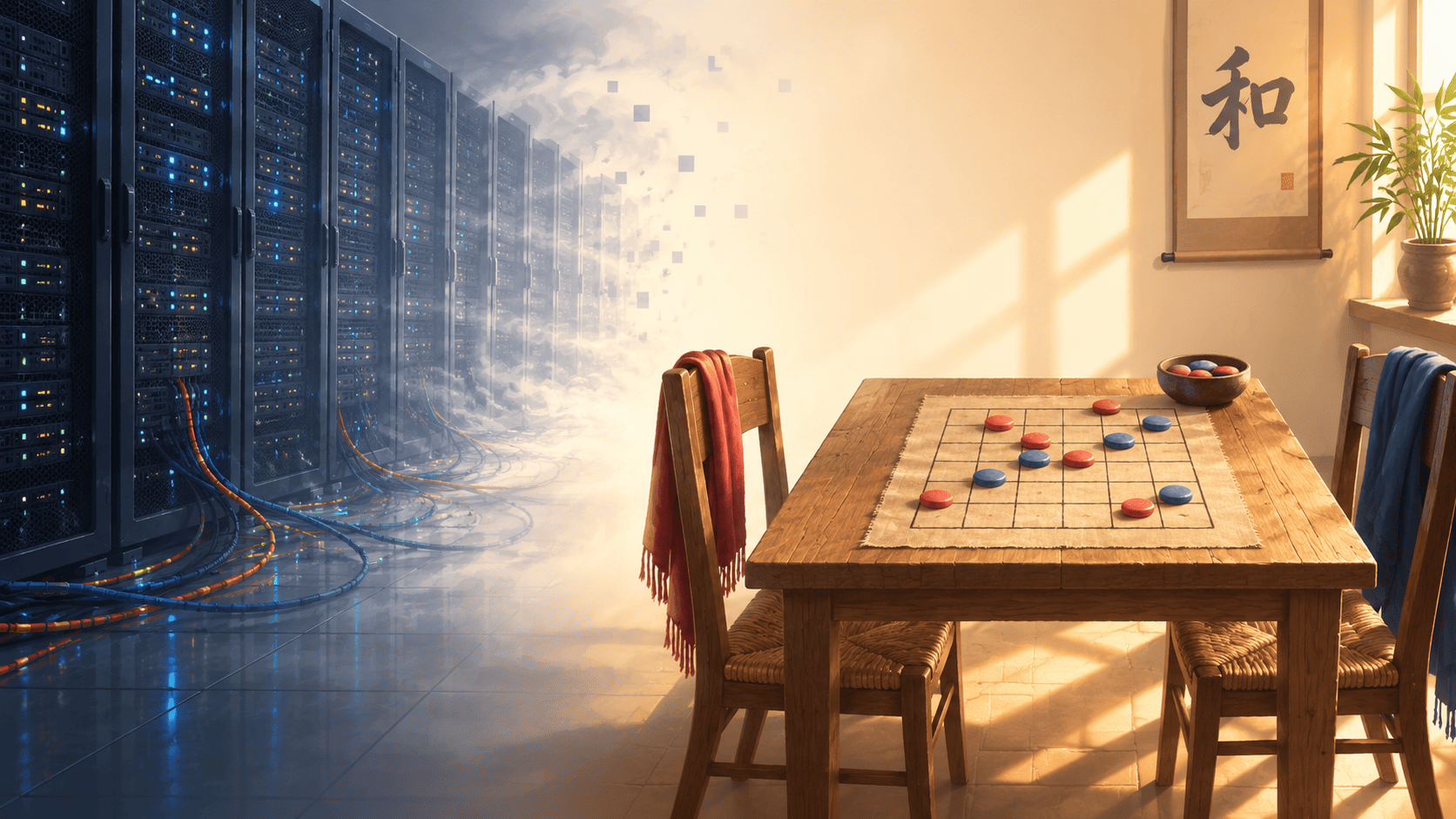
Rules are the immortal part
Now the hopeful turn, because the old shelf has been quietly answering this question for five thousand years. Chess sets have burned by the million — warehouses, wars, house fires — and chess never noticed, because a game and its equipment are different things. The set is a body; the game is the rules, and rules stored in enough heads are unkillable. Every technology that ever carried games — carved stone, wood, printed cardboard — eventually failed, and the good games walked out of the wreckage into the next medium without breaking stride.
The digital era doesn't repeal that law; it just sorts today's games by it, ruthlessly. Ask of any digital game: if every server closed tonight, what survives? For a sprawling online world whose rules are ten thousand pages of server code, the honest answer is: footage and nostalgia — its rules were never in anyone's head, so there's nothing for heads to save. But for a small pure duel, the answer is: everything that matters. A 6×6 board, sixteen pieces, a push rule and two win conditions fit on a napkin — the game could be replayed with coins on paper by anyone who remembered it, and reimplemented from that napkin by any programmer in a weekend. Some digital games are servers wearing a game; others are games currently wearing a server. The wardrobe is mortal. The second kind isn't.
The preservation movement
Between those two fates stands a real and growing rescue effort, worth knowing about. Archives and museums of play now collect games the way libraries collect books — code, hardware, box art, and play culture. Emulation projects keep dead platforms breathing so their games remain runnable on machines that no longer exist. Fan communities reverse-engineer closed servers to relight beloved online games — a legal gray zone doing historically important work. And archivists fight, case by case, for the right to preserve at all, against licenses written as if memory were piracy.
It matters, and the honest accounting says: it's triage. Emulation saves what was already self-contained; server reconstruction saves a fraction of what closes; licensing stops much of the rest cold. The movement's own experts state the pattern plainly — the games that survive preservation best are the ones that needed it least: complete, offline-capable, rules-forward. Preservation is a safety net, not a strategy. The strategy, as ever on this shelf, is to be the kind of game that doesn't need saving.
Lessons from the survivors
So fold history's answer back onto the question. Which of today's digital games greet 2126? The old shelf's rule, updated one word: the games that live as rules plus community survive platform death, exactly as chess survived every set's death. From that, three predictions, offered with the confidence of five millennia of precedent.
The pure small duels are the best-armored digital games ever made: napkin-sized rules, teachable by demonstration, human rivalry as the content, trivially reimplementable forever. Their platforms will die repeatedly; the games can simply keep changing bodies — the family's oldest trick. The server-dependent spectaculars will mostly not make it as play — they'll be remembered, studied, and mourned like great theatrical runs: real art, inherently closing. And the deciding factor, in almost every case, won't be the code. It'll be whether the rules are small enough to live in heads, and whether enough heads care — the Lindy engine, admitting digital candidates on the same old terms.
What players can do
None of this is spectator sport; where your hours and money go is the selection pressure. A preservation-minded buyer's checklist, five items, none burdensome. Favor offline-capable games: a game you can play against the AI on a plane is a game with no kill switch on its core — the single strongest resilience marker. Favor complete games: everything on day one, no treadmill — the forever-aisle tells and the survival tells are the same list. Favor learnable rules: if you could teach it with coins on paper, it can outlive anything. Keep what's yours: replay files, recorded games, notation — the game's literature-in-miniature, and yours to save. And build the human part: a standing rival is worth more to a game's future than any server contract; rivalries are how rules get stored in heads, and heads are the only storage medium with a five-thousand-year uptime record.
A letter to 2126
Close with the thought experiment the whole shelf has been building toward. Someone in 2126 sits down to play something. The smart money on what's in front of them: Go, chess, mancala — the ancients, obviously; betting against them has been wrong for fifty consecutive generations. Beside the ancients, some games that today are young — the ones whose rules turned out small enough to keep changing bodies, whose communities kept teaching. Between those players and us runs the only unbroken thread this shelf has found: not any technology, but the habit of two humans across a board, thinking hard at each other for joy.
What we owe the future, if that framing moves you, is modest: play the durable things deeply, keep their rules alive in heads and on napkins, and teach somebody. Every game that ever crossed a century did it exactly that way — one taught player at a time, body to body, medium to medium. The servers are temporary. The shove, the alignment, the race, the rematch — those are already immortal. All they've ever needed is carriers.
The napkin test: try it right now
Every idea in this article compresses into one exercise, and it takes five minutes with an index card. Pick the digital game you'd most hate to lose. Now write its complete rules on one side of the card — everything a stranger would need to play a fair game against you, nothing more.
Three outcomes, each a diagnosis. It fits, easily: your game is effectively immortal — you're holding its escape pod. Whatever happens to servers, stores, or companies, this card plus two players reconstitutes the game anywhere, forever. File the card somewhere real; you've just done more preservation than most museums manage. It fits, barely, with painful compression: your game is rescuable but fragile — the rules live mostly in the software's enforcement rather than in your head. Worth actually learning the edge cases you had to look up; a game you can't fully state is a game you only half-carry. It doesn't fit at all: you've learned something true and slightly sad — you love a performance, not a rules-object. Enjoy it exactly as you'd enjoy live theater, and place your long-term study elsewhere.
Two extensions for the committed. Teach someone the game from the card only — if they can play a legal game against you afterward, the card is complete and the transmission chain has one more link. And start the shoebox: replay files, screenshots of great finishes, notation of your best games. Every immortal game has a literature; yours can too, and shoeboxes have outlived a remarkable number of servers already.
Questions people ask
Hasn't every entertainment medium had this problem — silent films, old TV? Partially lost, yes — but a film needs its recording; a game needs only its rules, which is why games are the most preservable medium in principle and the most casually lost in practice. A game with living players needs no artifact at all. That asymmetry is this article's whole hinge.
If a digital game's rules survive but the original app dies, is it the same game? The same question as "is chess on a new set the same game?" — and the same answer: yes, if the rules and the players carry over. Games have never been their bodies. A reimplemented duel with its community intact is the game, continued; the app was an edition.
Should I avoid server-dependent games, then? No — just know what you're buying: a performance, possibly magnificent, with a closing date nobody will announce in advance. Spend evenings there freely. Spend years — study, mastery, identity — in games whose rules you could rescue with a napkin. It's the fad-and-forever portfolio again, with infrastructure risk added to the math.
One line to keep? Servers are mortal, sets are mortal, media are mortal; rules in heads have a perfect survival record five thousand years long — so play the games small enough to live there.