Learn › Why great games never die › Fads vs. forever games
Fads vs. forever games
Twice a decade, reliably, a game eats the world. Everyone's playing it, everyone's talking about it — and eighteen months later it's a memory with merchandise. Meanwhile, quietly, a few games just… stay. Same shelves, same phones, no headlines. This article is about telling the two apart while the hype is still loud — without becoming the bore who sneers at whatever's fun this year.
Every era has its craze
Game fads are not a modern disease; they're a human constant, and the history is genuinely affectionate reading. The 1920s West went so mad for mah-jongg that ocean liners ran out of sets mid-crossing — a craze so hot it spawned etiquette books and dress styles before cooling into a beloved niche. Mid-century America burned through backgammon booms, bridge manias, and boardgame crazes whose boxes now furnish thrift stores. Every decade since has kept the rhythm: the puzzle craze, the party-game wave, and in the app era the cycle compressed from years to months — a mobile puzzle conquering every commute on Earth, then evaporating from memory by the following spring.
Note what the list is not: a list of bad games. Many fads are excellent designs; some (mah-jongg, backgammon) were durable classics elsewhere and merely faddish in their new market. A fad is not a quality verdict. It's a shape — a particular curve that popularity traces through time — and shapes can be diagnosed early, which is the trick this article exists to teach.
The anatomy of a fad
The fad curve has four acts, and it's eerily consistent across a century of examples. Act one: the novelty spike. The game offers something never seen — a fresh mechanic, a new gadget, a striking look — and novelty is rocket fuel: instant delight, zero learning curve, perfect for showing someone else. Act two: social contagion. The game spreads because everyone is playing it — the reason to join is the crowd, not the depth. Participation becomes briefly mandatory; abstaining feels like missing a party. Act three: saturation. Everyone who will try it has tried it. The novelty — the actual engine — is spent, because novelty is by definition non-renewable. Act four: the cliff. With novelty gone and the crowd moving on, there's no second engine. The curve doesn't taper; it drops, because the moment playing stops being current, its main reward disappears.
Read the anatomy closely and the diagnosis writes itself: a fad is a game whose primary fuel is external — newness and crowd-momentum — rather than internal. Nothing wrong with that fuel. It just doesn't refill.
The anatomy of a keeper
The forever curve looks nothing like the spike. It starts slow — keepers rarely explode, because depth doesn't demo as well as novelty. It grows by rematch: two people finish and one says "again," which is the sound of the real engine — the renewable fuel of rivalry — catching. It survives its own saturation, because when the crowd moves on, the remaining players aren't there for the crowd; they're there for the game. And then the compounding starts: skill ceilings that keep receding, rivalries that deepen, clubs and ladders and vocabulary forming — the flywheel, assembling itself from player behavior nobody organized.
The signature difference is what happens on night fifty. The fad on night fifty is the same experience as night one, minus the newness — thinner every visit. The keeper on night fifty is a different experience from night one: you're better, your rival's better, the game has opened rooms you didn't know were there. Fads spend a fixed deposit of delight; keepers pay interest. Everything else — the curves, the cliffs, the longevity — follows from that one accounting difference.
Novelty is not the enemy
Now the paragraph this genre of article usually skips: fads are fun, and being fun is not a crime. The mah-jongg craze gave millions of people a joyful year. This season's viral game is giving the same gift right now. Novelty-chasing is one of play's legitimate pleasures — the spark of a fresh mechanic, the communal joy of everyone learning the same thing at once, is real value, honestly delivered. A player who samples every craze and keeps none is not doing it wrong.
The trap is singular and specific: confusing the two shapes — investing keeper-scale resources in a fad-shaped game. Grinding a spike-curve game for mastery is buying stock in a firework: the skill you're building is welded to a game that won't be there to reward it. The reverse error is quieter but real too: dismissing a slow-burning keeper because it never had a moment. The cure for both is the same — diagnose the shape, then spend accordingly: fads get your evenings, keepers get your years.
The tells, side by side
You can usually call the shape early — even mid-hype — by checking what the game runs on. Five tells, phrased as questions to ask of any current sensation:
Treadmill or depth? Does staying interested require a stream of new content — levels, seasons, drops — or does the base game deepen on its own? Content treadmills are novelty on a subscription: the surest single fad tell. A keeper's "new content" is your opponent improving.
Spectacle or system? Is the appeal something that happens to you (effects, reveals, jackpots) or something you do (decisions that compound into skill)? Watch a stream: if viewers gasp at the game rather than the play, note it down.
FOMO or word-of-mouth rivalry? How are people recruited? "You have to try this before it's over" is act-two contagion announcing itself. "I need someone to play against" is the rivalry engine hiring. The recruitment pitch is a diagnosis in the wild.
Who's still there after the crowd? If the game's already past peak, look at the remainder. A fad's residue is nostalgia; a keeper's residue is a community — smaller, sharper, organizing ladders. (This tell arrives late but never lies.)
Does night fifty differ from night one? The accounting question, asked directly. Players a month in describing new discoveries: keeper. Players a month in describing the same fun, fondly but identically: firework. It was lovely; schedule nothing around it.
App stores: fad factories with a forever aisle
Mobile deserves its own chapter because the economics manufacture fads. Free-to-play business models need novelty spikes, social contagion, and content treadmills — the fad curve isn't an accident there; it's the revenue plan, executed by professionals, and there's no shame in enjoying the fireworks show. But the same stores stock a quiet forever aisle, and knowing you're in it takes one glance at the shape: games that are complete — no treadmill, no season pass, the whole game on day one; games built around a human opponent rather than a content faucet; games where the store reviews mention years of play and a rating you defend. The tells from the last section, run on an app-store page, sort the aisles in about a minute — the same skill the deep-game field guide teaches for shelves, tuned for phones. The abstracts congregate in the forever aisle for structural reasons: a pure duel can't run a content treadmill. Its only renewable resource is you and your rival, which means the games that can't manufacture novelty were forced to be deep instead.
A portfolio approach
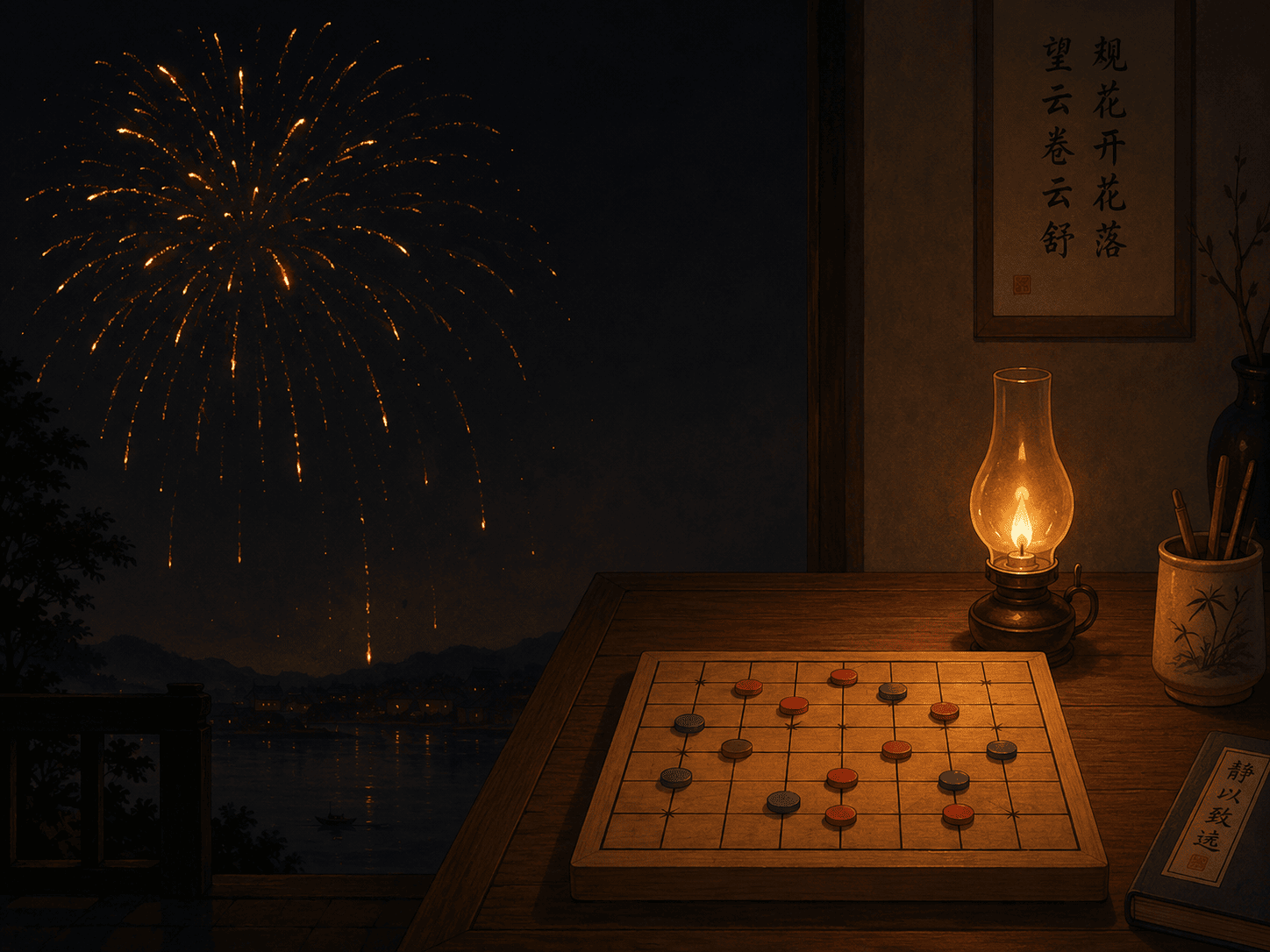
So here's the closing advice, and it's cheerfully unpuritanical: run a portfolio. Enjoy the fireworks — play the craze while it's communal and bright, with zero guilt and zero investment thesis. And alongside, hold one or two lamps: keeper-shaped games — Lindy-proven or showing old bones — where your hours compound into something that will still exist when you're better. The fads supply variety and communal sparkle; the keepers supply the rivalry, mastery, and continuity that fads structurally can't. Confusing the two is the only mistake on offer. A well-run game life, like a well-run anything, is mostly knowing which pocket the money's in.
The five-minute store-page audit
The tells work from a distance — you can usually call a game's shape from its store page before installing anything. Here's the walkthrough, five artifacts in five minutes.
The screenshots. What's being shown off — the game's decisions or its effects? Boards, positions, and rankings say system. Explosions, jackpots, and level-complete confetti say spectacle. Designers showcase their real engine; believe them.
The review language. Skim a dozen reviews and note the tense of the love. "Three years in and still improving" is keeper language. "Can't stop playing this week" is act-two contagion, honestly reported. Look also for the rivalry markers — mentions of a spouse, a coworker, a nemesis. Keepers accumulate rivalry stories the way fads accumulate streaks.
The update history. A content treadmill announces itself right there: weekly drops, seasons, events — novelty on a delivery schedule, which is the business model of the spike. A complete game's updates read differently: fixes, polish, maybe a new AI level. Quiet update logs are a keeper tell hiding in plain sight.
The monetization. What exactly is for sale? Cosmetics and a one-time price sit comfortably with keepers. Energy timers, streak repair, and pay-to-skip are fad economics — they only make sense if the game's hold on you is momentum rather than depth.
The age. Finally, the Lindy line: when did it launch? A small game still prominent five years on has already survived its novelty's death — the single strongest signal a store page can show. Run all five on two apps you know — one you still play, one you burned through — and the audit will agree with your history embarrassingly well. Then it's calibrated, and you can point it at anything new.
Questions people ask
Isn't today's fad sometimes tomorrow's classic? Rarely, and the record is instructive: crazes mostly cool into niches or vanish, while the games that became immortal mostly never spiked at all — they compounded quietly from the start. The exceptions (backgammon's booms, mah-jongg's western afterlife) were durable games that had fads, not fads that became durable. The spike and the flywheel are different machines.
How fast can you honestly call the shape? Sooner than feels polite: the treadmill, spectacle, and recruitment tells are visible during the hype, often from the store page alone. The one tell that needs patience is the post-crowd community. Call the shape provisionally in week one; confirm it in year one.
Is it wrong that I loved a fad and miss it? Not remotely — that year of communal fun was real value, fully delivered. Missing it is just the receipt. The only revision worth making is where the next five hundred hours go.
One line to keep? Fireworks and lamps are both light: applaud the one, read by the other — and never confuse which is which while deciding where your years go.